Noah Schröder · 13 September 2026
Charting Anchor Distribution Shifts During Platform Integrations for Enterprise Sites
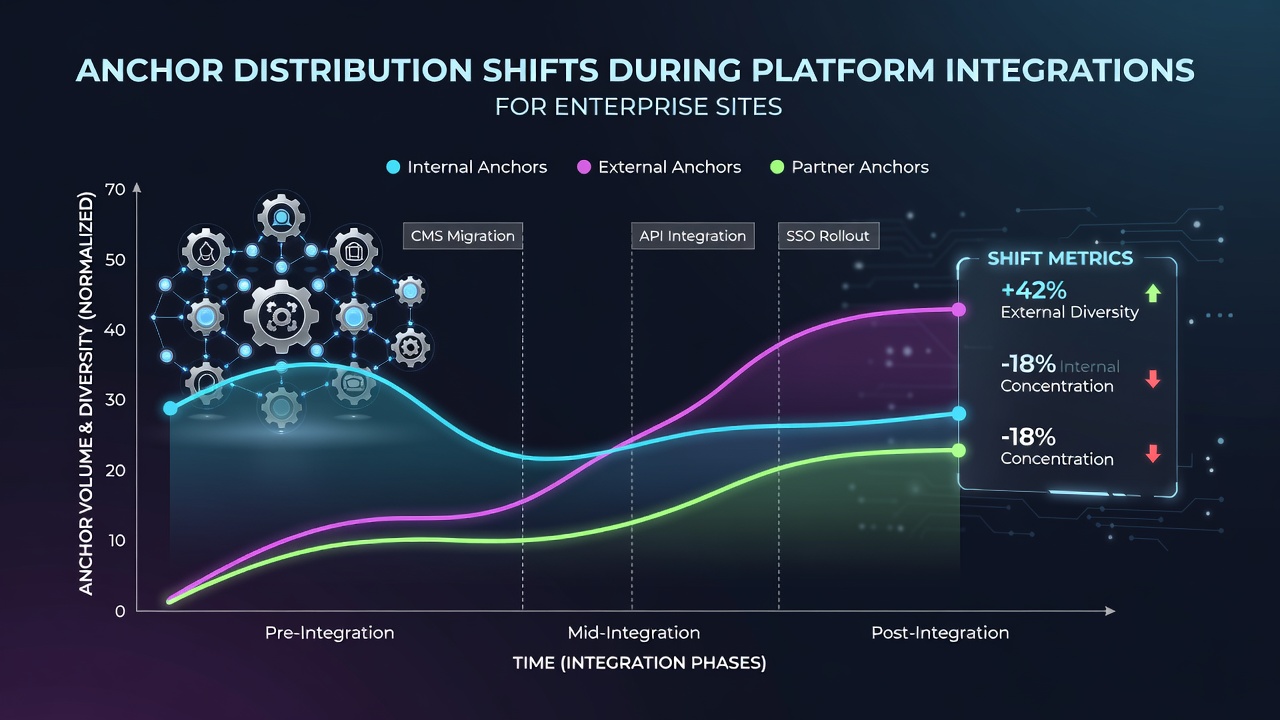
Enterprise websites undergo platform integrations that often alter backlink structures, and observers note how anchor text distributions shift as a result of these transitions. Researchers track these changes through systematic data collection before, during, and after migration events, while data shows that anchor profiles reflect both technical adjustments and content realignments. Studies indicate that shifts occur when new systems replace legacy platforms, leading to modifications in how external links reference site sections.
Core Elements of Anchor Distribution Analysis
Anchor distribution refers to the proportion of different anchor text types pointing to a domain, including exact match phrases, branded terms, and generic descriptors, whereas platform integrations introduce variables that affect these proportions. Experts have observed that during such projects, crawl data reveals fluctuations in link equity flow because new URL structures replace older ones, and this process requires mapping historical anchors to updated destinations. Those who study these patterns find that tools for log file analysis combined with backlink databases provide the necessary granularity to quantify the changes without relying on estimates alone.
Integration timelines typically span several months, and during this period anchor profiles move through distinct phases that include pre-integration baselines, transitional volatility, and post-stabilization patterns. Evidence suggests that monitoring must account for both internal redirects and external link updates initiated by third-party sites, since these factors compound the observed shifts in distribution metrics.
Technical Factors Driving Distribution Changes
Platform integrations often involve content management system replacements or e-commerce framework consolidations, and these actions alter sitemap hierarchies along with canonical tag implementations. Data indicates that when enterprise teams consolidate multiple subdomains into a unified structure, anchor texts previously distributed across separate properties converge on fewer target pages, which changes the overall ratio of commercial to informational anchors. Observers note that JavaScript-heavy integrations can delay crawler access to new link placements, creating temporary gaps in recorded anchor data until full rendering occurs.
URL parameter handling during integration further influences how search systems attribute anchors, while studies show that inconsistent handling of query strings leads to fragmented link signals that require careful canonicalization. In September 2026, figures from enterprise analytics platforms revealed that sites completing integrations without prior anchor audits experienced prolonged recovery periods before distribution metrics returned to pre-project levels.
Methods for Accurate Charting of Shifts
Teams begin by exporting historical backlink data from multiple sources and segmenting it by anchor category, then they compare these segments against post-integration crawls to identify percentage point movements. Researchers discovered that combining server log analysis with third-party link indexes produces more reliable shift detection than single-tool approaches, because each data source captures different portions of the link graph. Those who have examined large-scale projects emphasize the value of establishing control groups of non-migrated pages to isolate integration-specific effects from broader market trends.
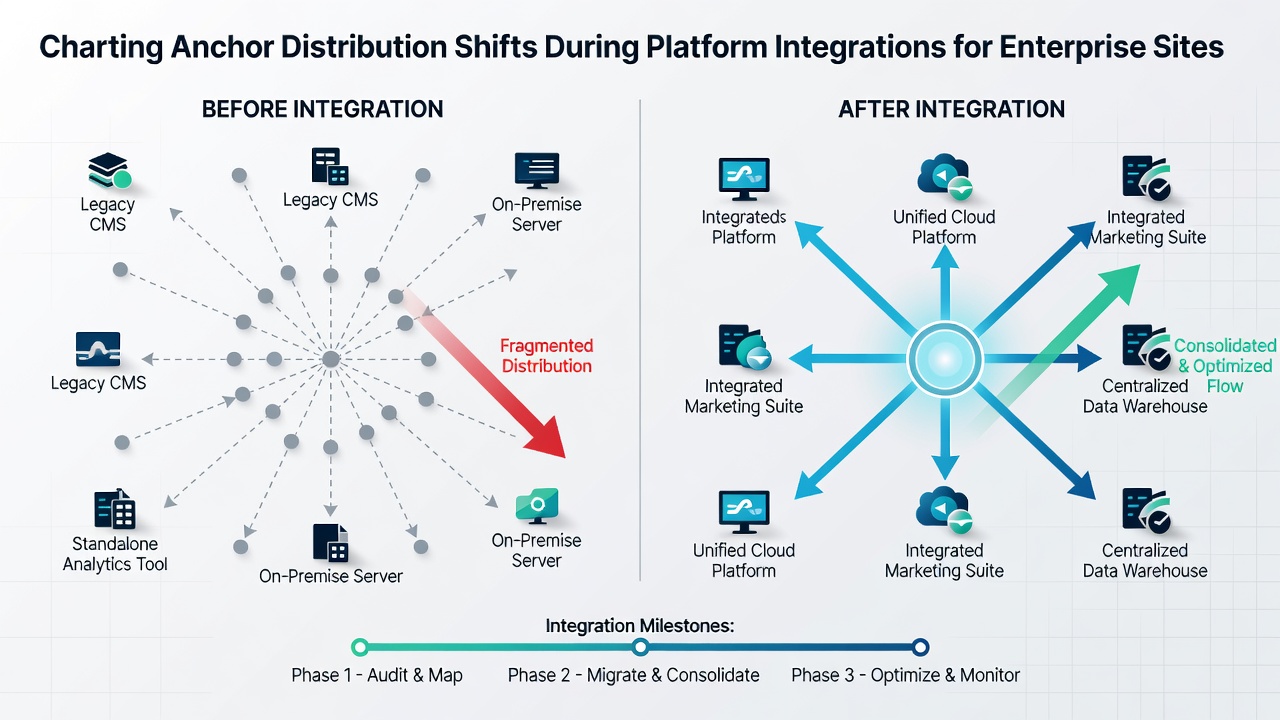
Statistical models applied to anchor time series help distinguish noise from meaningful deviations, and these models incorporate factors such as link velocity and domain authority changes. Evidence suggests that regular sampling intervals of seven to fourteen days capture most significant movements without overwhelming analysis resources, while longer gaps risk missing short-term spikes that occur immediately after launch.
Case Examples from Enterprise Integrations
One documented instance involved a multinational retailer that migrated its product catalog platform, resulting in a measurable increase in branded anchor usage as new navigation paths received links from partner sites. Another project at a financial services firm showed how generic anchors declined after the integration of a customer portal because updated page titles encouraged more descriptive external references. These examples illustrate how distribution shifts align with content and structural decisions made during the integration process rather than occurring randomly.
Additional data from cross-industry reports demonstrates that sites maintaining consistent anchor outreach campaigns throughout integration phases experience smaller deviations than those pausing such activities, and this pattern holds across different geographic markets. Academic work published through research institutions continues to explore how machine learning classification of anchor texts can accelerate the identification of anomalous shifts during these complex transitions.
Conclusion
Charting anchor distribution shifts provides enterprise teams with measurable indicators of integration success and areas requiring further link remediation. Organizations that establish baseline measurements and maintain consistent monitoring protocols position themselves to respond to changes as they develop, while integration projects without such tracking face extended periods of uncertainty regarding link profile stability. Continued refinement of analysis techniques supports more predictable outcomes across future platform initiatives.