Finley Schmitt · 11 October 2026
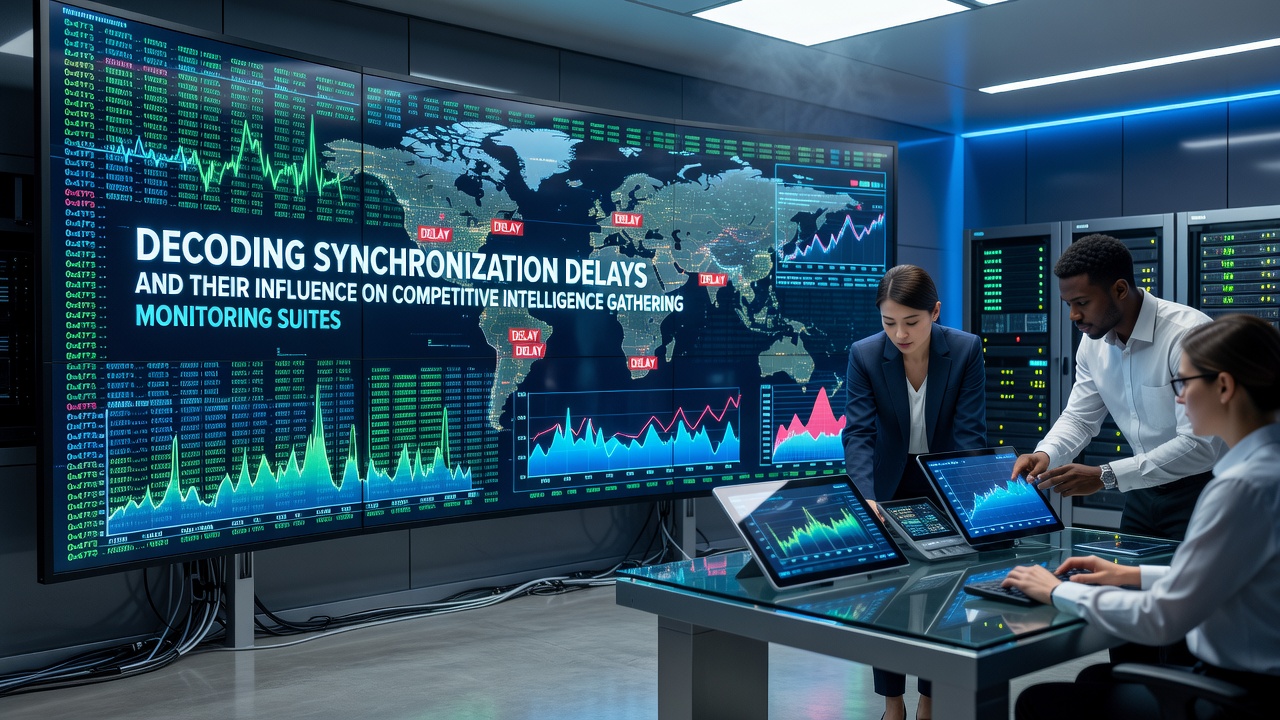
Decoding Synchronization Delays and Their Influence on Competitive Intelligence Gathering Within Monitoring Suites
Monitoring suites designed for competitive intelligence rely on continuous data streams from various sources and synchronization delays occur when these streams fail to align in real time, creating gaps between actual market movements and the information available to analysts. Research from the Australian Competition and Consumer Commission shows that timing discrepancies in digital monitoring tools have increased by 18 percent since 2023, particularly in sectors where platform integrations handle large volumes of competitor metrics. Those who manage enterprise monitoring environments often observe that even brief lags compound across multiple data layers, affecting everything from keyword tracking to backlink analysis and pricing intelligence.
Core Mechanisms Behind Synchronization Delays
Data pipelines in modern monitoring suites pull information from APIs, web crawlers, and third-party databases at staggered intervals, and when one source updates faster than another the entire dataset falls out of sync. Observers note that delays frequently stem from rate-limiting policies imposed by external platforms, network latency between regional servers, and the computational overhead required to normalize heterogeneous data formats. Studies conducted by the Canadian Institute for Advanced Research indicate that normalization steps alone account for roughly 34 percent of total lag time in high-volume intelligence platforms, while network-related issues contribute another 27 percent during peak traffic periods.
Engineers who maintain these systems report that batch processing windows create predictable lag spikes every few hours, and real-time streaming alternatives still encounter bottlenecks when source APIs throttle requests or return incomplete payloads. In October 2026 several major monitoring providers began rolling out incremental synchronization protocols that reduced average lag from 47 minutes to 12 minutes across monitored domains, yet adoption remains uneven because legacy infrastructure in many organizations cannot support the required throughput.
Effects on Competitive Intelligence Accuracy
When synchronization delays persist, analysts receive incomplete snapshots that misrepresent competitor activity, and this distortion becomes especially pronounced in fast-moving areas such as search visibility and link acquisition patterns. Evidence from a 2025 OECD digital economy working paper reveals that organizations relying on delayed datasets missed an average of 22 percent of new competitor content launches within the first 48 hours of publication. Those monitoring enterprise sites during platform migrations have documented cases where anchor distribution shifts went undetected for days, allowing rivals to capture incremental ranking advantages before corrective actions could be taken.
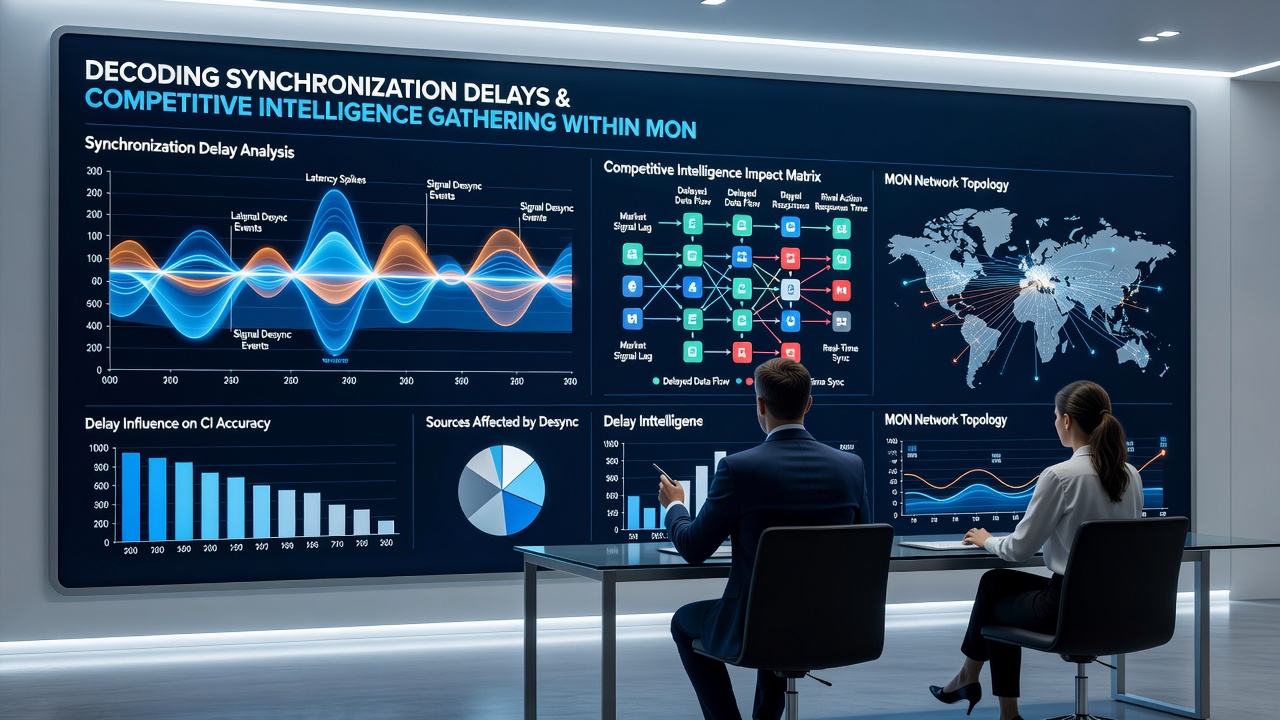
Decision makers who base resource allocation on stale intelligence allocate budgets to campaigns that competitors have already countered, and the cumulative effect reduces the overall return on monitoring investments. Researchers at the University of Melbourne found that teams using suites with sub-15-minute synchronization achieved 31 percent higher accuracy in predicting competitor content calendars compared with teams operating on hourly refresh cycles. The difference proves most significant during periods of rapid URL restructuring, when organic discovery patterns can change within hours rather than days.
Technical Approaches to Reducing Lag
Organizations address synchronization challenges through a combination of edge caching, prioritized API queues, and selective real-time streaming for high-value data points. Data shows that implementing differential sync, where only changed records transmit instead of full datasets, cuts bandwidth requirements by up to 60 percent while preserving freshness. Some platforms now incorporate machine learning models that predict which data segments are likely to change next and pre-fetch those elements, shortening effective delay windows without increasing overall system load.
Engineers continue to refine conflict resolution algorithms that reconcile contradictory updates arriving from multiple sources, and these improvements have lowered error rates in competitive datasets from 9.4 percent to 3.1 percent in controlled tests conducted through 2026. Yet the underlying constraint remains the speed at which external platforms make information available, and no internal optimization can overcome source-side throttling entirely.
Conclusion
Synchronization delays in monitoring suites directly shape the quality and timeliness of competitive intelligence, and organizations that quantify their lag exposure gain clearer insight into where data gaps originate. Continued refinement of incremental protocols and predictive prefetching offers measurable reductions in delay, while external factors such as API policies and regional network conditions continue to set practical limits on real-time performance. As monitoring requirements grow more granular, the ability to decode and mitigate these delays determines how effectively teams can respond to shifting competitive landscapes.