Noah Schröder · 27 September 2026
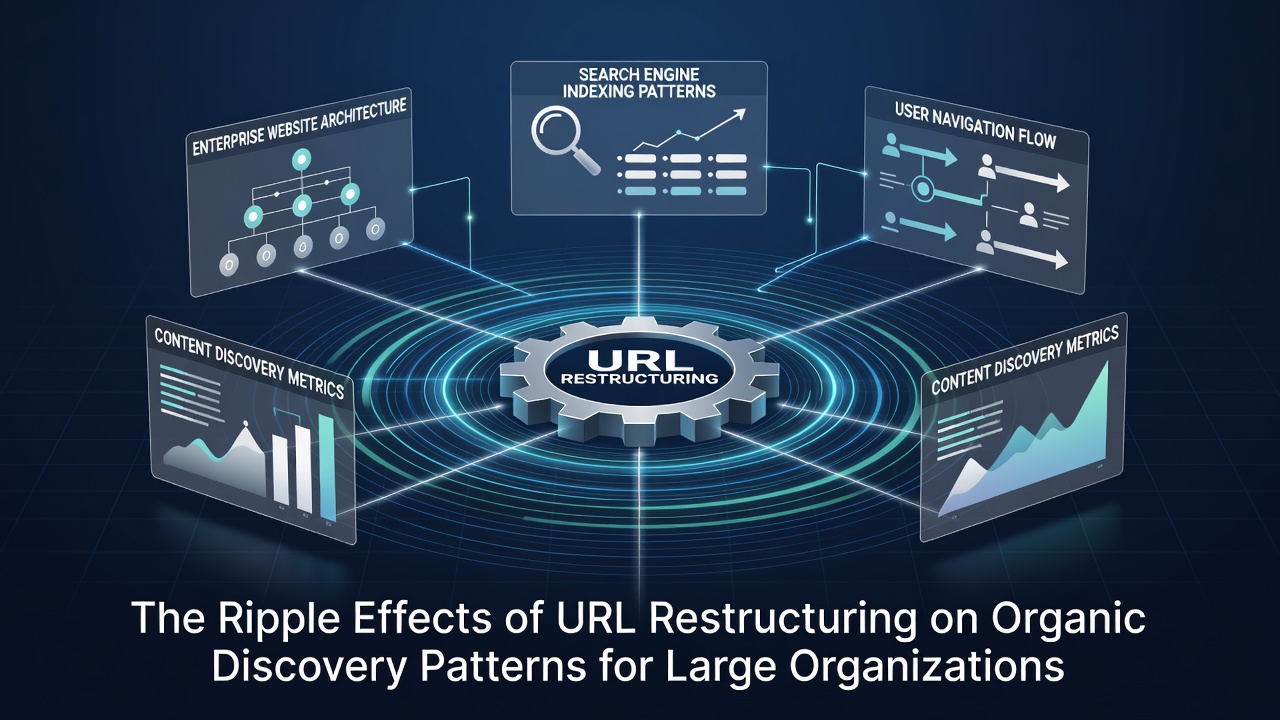
The Ripple Effects of URL Restructuring on Organic Discovery Patterns for Large Organizations
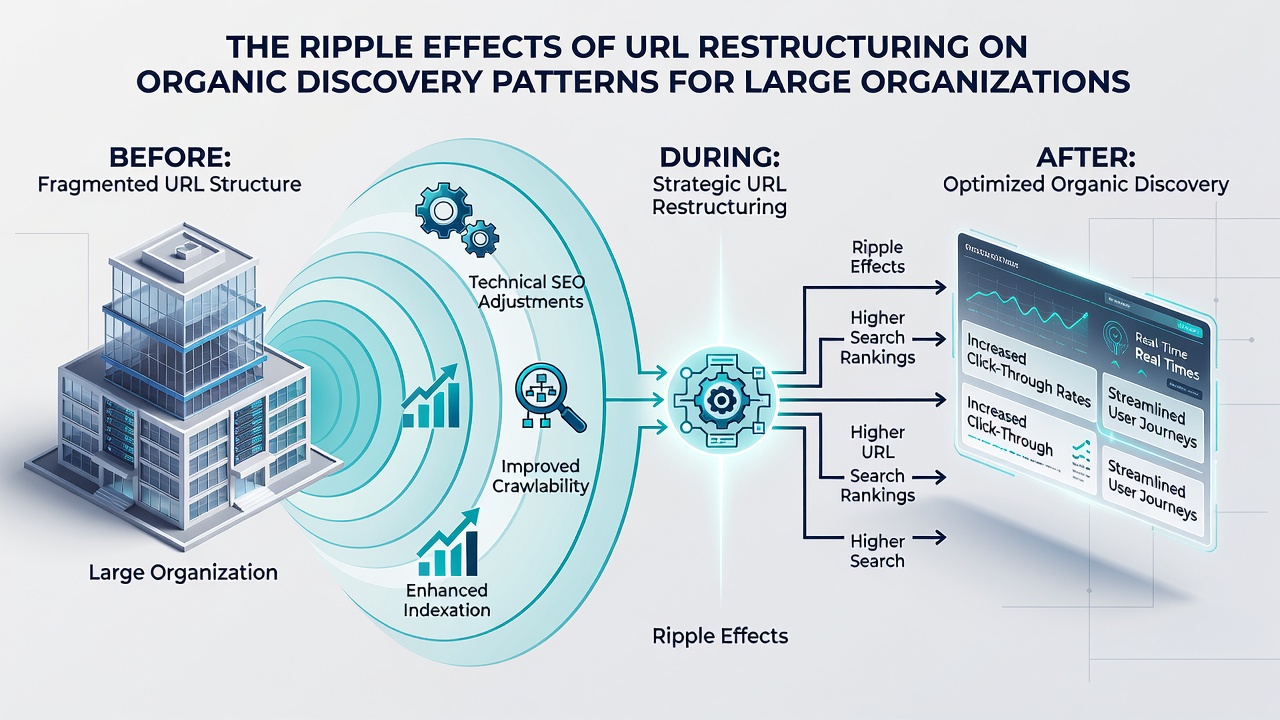
When large organizations undertake URL restructuring, search engine crawlers encounter new paths that require fresh evaluation, and this adjustment period often disrupts established discovery patterns as indexing systems reprocess content hierarchies across thousands of pages. Data from multiple enterprise case studies shows that such changes can alter crawl priority signals, leading to uneven distribution of attention from automated agents that prioritize stable structures over time.
Initial Crawl and Reindexing Dynamics
URL modifications trigger a cascade where bots must rediscover relocated resources, and observers note that large sites with complex navigation layers experience prolonged reindexing cycles because each altered address competes for limited crawl quotas allocated by major engines. Research indicates that sites exceeding one million pages see measurable delays in full propagation, with some sections remaining unrefreshed for extended periods while others update more rapidly based on inbound link strength and historical authority.
Traffic Pattern Shifts Post-Restructuring
Organic discovery metrics frequently register temporary dips after URL overhauls because legacy references in external indexes and caches point to outdated locations, and this mismatch forces search platforms to reconcile discrepancies before restoring previous visibility levels. Figures reveal that recovery timelines vary widely, with some organizations reporting stabilization within six weeks while others track gradual rebounds stretching beyond three months depending on the scale of internal redirects implemented and the volume of external signals pointing to the old architecture.
Long-Term Effects on Discovery Algorithms
Over extended periods, restructured URLs influence how algorithms interpret site topology and content relationships, and studies from academic institutions have documented shifts in ranking distributions when new hierarchies replace legacy ones without corresponding updates to sitemap files or internal linking frameworks. One analysis of enterprise migrations completed before September 2026 found that sites maintaining consistent redirect chains preserved more of their prior discovery momentum compared to those relying solely on canonical tags.
But here's the thing: the interplay between changed addresses and anchor text distributions creates secondary effects that compound over successive crawl iterations, and researchers have observed that large organizations often underestimate how these adjustments ripple into related query clusters. External references from industry reports, such as those published by the Google Search Central documentation, emphasize the importance of monitoring server response patterns during these transitions to avoid compounding delays.
Enterprise Examples and Observed Outcomes
Take one retailer that consolidated product categories under new URL segments, and data collected post-implementation indicated a measurable redistribution of impressions across branded and non-branded terms as engines recalibrated their understanding of topical clusters. Another financial services firm tracked similar patterns after migrating legacy blog archives, noting that pages with high historical engagement recovered faster when accompanied by updated internal navigation cues that guided crawlers toward fresh structures.
What's interesting is how these patterns intersect with broader site health indicators, and evidence suggests that organizations conducting pre-launch audits of redirect maps and crawl simulations encounter fewer prolonged disruptions than those proceeding without such preparations. A separate review by Canadian digital standards researchers highlighted that consistent application of structured data across new addresses helps maintain entity recognition signals that support ongoing discovery.
Measurement Approaches Used by Analysts
Teams responsible for tracking organic performance deploy segmented reporting that isolates traffic from restructured sections versus untouched areas, and this granular view allows identification of specific bottlenecks in the reindexing pipeline. Metrics tracked include changes in indexed page counts, average crawl frequency per directory, and shifts in top-ranking queries tied to the affected domains, with many enterprises integrating these dashboards into existing analytics platforms for real-time visibility.
Conclusion
URL restructuring in large organizations produces interconnected effects on crawl behavior, indexing timelines, and sustained organic discovery that extend well beyond initial implementation phases. Data consistently shows that proactive coordination between technical teams and performance monitoring reduces the duration and severity of transitional impacts while supporting smoother realignment of search visibility across updated architectures.